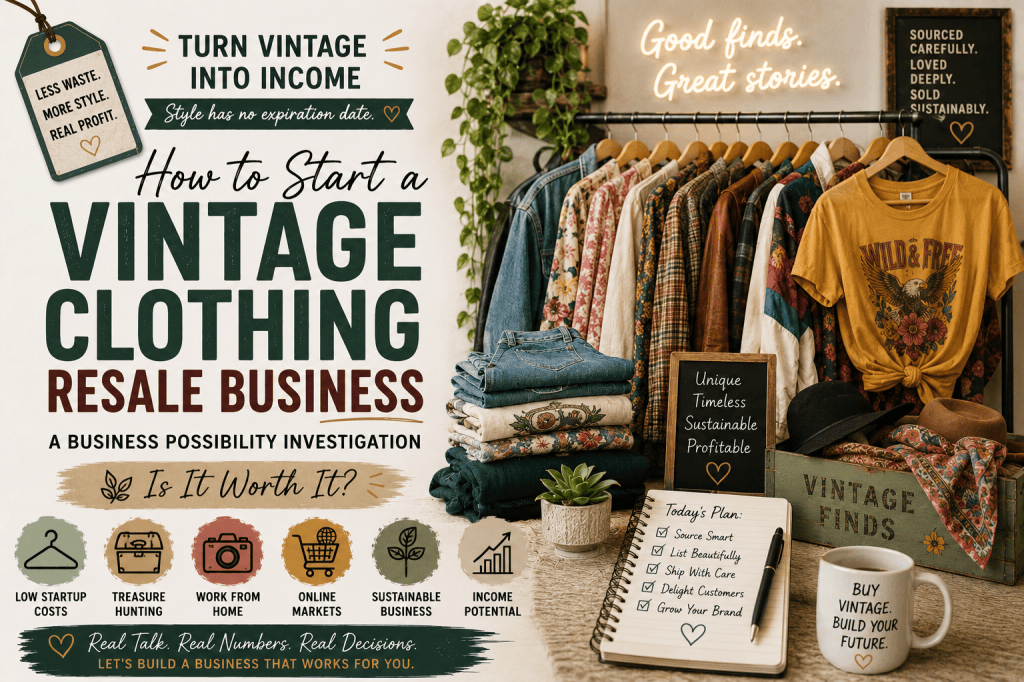
Vintage fashion has evolved from a niche hobby into a thriving corner of the resale economy. What was once associated primarily with thrift stores and flea markets is now a global marketplace powered by online platforms, social media, and a growing appreciation for sustainable shopping.
For some buyers, vintage clothing offers unique style that can’t be found in modern retail stores.
For others, it’s about nostalgia, craftsmanship, or reducing the environmental impact of fast fashion.
That growing demand has also created an intriguing business opportunity.
Many entrepreneurs now build businesses around sourcing, curating, and reselling vintage clothing—sometimes as a weekend side hustle, sometimes as a full-time online store.
But is it actually a good business?
This Business Possibility Investigation isn’t designed to teach you exactly how to start a vintage clothing resale business.
Instead, it answers one important question:
Is starting a vintage clothing resale business worth investigating further?
Let’s take a closer look.
Business Snapshot
| Category | Snapshot |
|---|---|
| Business Type | Online retail business |
| Startup Investment | Low to Moderate |
| Can Start Part-Time? | Yes |
| Home-Based? | Yes |
| Mobile? | Mostly online |
| Physical Work | Moderate |
| Inventory Required | Yes |
| Growth Potential | High |
Vintage clothing resellers purchase secondhand clothing and accessories, then resell them through online marketplaces, their own websites, social media, pop-up events, or physical retail locations.
Inventory may come from:
- Thrift stores
- Estate sales
- Yard sales
- Auctions
- Consignment shops
- Wholesale vintage suppliers
- Private collections
Customers range from fashion enthusiasts and collectors to environmentally conscious shoppers looking for one-of-a-kind pieces.
Many businesses begin in a spare bedroom or garage before expanding into dedicated storage, warehouse space, or boutique storefronts.
Beyond $100 Takeaway
Vintage clothing resale blends retail, creativity, and entrepreneurship into a business that can begin small and grow steadily over time.
Why People Choose This Business
Few businesses combine treasure hunting and entrepreneurship quite like vintage resale.
For many owners, finding inventory is just as enjoyable as selling it.
People are often drawn to this business because it offers:
- Relatively low startup costs
- Flexible scheduling
- Creative expression
- Sustainable business practices
- Online selling opportunities
- Love of fashion
- The excitement of discovering valuable pieces
Unlike traditional retail stores that purchase large quantities of identical products, vintage resellers often build businesses around carefully curated collections.
Many owners also enjoy creating a recognizable aesthetic that attracts repeat customers.
Beyond $100 Takeaway
This opportunity often appeals to people who enjoy the process as much as the profits. Curiosity and creativity can become competitive advantages.
Startup Costs
Compared to opening a traditional clothing boutique, vintage resale typically requires a much smaller initial investment.
Rather than leasing retail space or purchasing inventory by the thousands, many sellers begin by building a carefully selected collection over time.
Depending on your business model, startup expenses may include:
- Initial inventory
- Storage
- Photography equipment
- Shipping supplies
- Business registration
- Website
- Marketplace fees
- Branding
- Inventory software
Exactly how much you’ll spend depends on your sourcing strategy, available storage space, and whether you’re selling through existing marketplaces or creating your own online store.
Business registration, resale permits, and tax requirements also vary by location, so it’s important to verify local regulations before launching.
Beyond $100 Takeaway
The barrier to entry is relatively approachable, but smart inventory decisions often matter more than spending more money.
Skills You’ll Need
Selling vintage clothing involves much more than having good taste.
Successful resellers often combine creative instincts with strong business discipline.
Helpful skills include:
- Fashion knowledge
- Research
- Photography
- Writing product descriptions
- Organization
- Customer service
- Shipping
- Inventory management
- Sales confidence
Research is particularly important.
Understanding eras, brands, construction quality, and customer preferences can significantly influence purchasing decisions.
Just as importantly, successful sellers know when not to buy something.
Beyond $100 Takeaway
Great vintage businesses are built on good buying decisions long before an item is ever listed for sale.
Time Until Your First Dollar
One appealing aspect of resale businesses is that income can begin relatively quickly.
Once inventory is listed, your first sale could happen within days—or it could take considerably longer.
Sales speed depends on factors such as:
- Inventory quality
- Photography
- Pricing
- Platform choice
- Brand recognition
- Seasonal demand
- Customer demand
Building a consistent business takes longer than making a single sale.
Most successful resellers gradually develop a larger inventory that increases the likelihood of daily or weekly orders.
Beyond $100 Takeaway
Selling one item is exciting. Building a business means creating consistent inventory that continues attracting buyers month after month.
Income Potential
Vintage resale offers several possible paths.
Some people casually flip a few interesting pieces each month.
Others operate successful online stores serving customers across the country—or even internationally.
Some eventually open boutiques, hire buyers, or build recognizable fashion brands.
Income depends on factors including:
- Inventory quality
- Average selling price
- Listing volume
- Photography
- Fashion knowledge
- Customer loyalty
- Seasonal demand
Unlike many service businesses, income isn’t tied directly to hours worked.
Instead, it’s influenced by the quality of your inventory and the systems you build around sourcing and selling.
Beyond $100 Takeaway
This business rewards good buying decisions, consistent listing activity, and long-term inventory management more than simply working longer hours.
Why Some People Love This Business
Vintage resale attracts entrepreneurs for reasons that go well beyond making money.
Owners often appreciate:
- Treasure hunting
- Creative merchandising
- Flexible scheduling
- Sustainable business practices
- Working from home
- Fashion trends
- Building a recognizable brand
Many also enjoy giving clothing a second life while helping customers discover unique pieces they couldn’t easily find elsewhere.
For fashion lovers, every sourcing trip feels a little like a scavenger hunt.
Beyond $100 Takeaway
Few businesses combine creativity, sustainability, and entrepreneurship quite like vintage resale.
Challenges Worth Considering
Vintage resale also presents unique challenges.
Finding quality inventory takes time.
Not every purchase turns into a profitable sale.
Items may remain unsold for weeks—or months.
You’ll also spend significant time:
- Photographing inventory
- Writing listings
- Packaging orders
- Managing storage
- Responding to customer questions
- Processing returns
Marketplace fees and shipping costs can also affect profitability.
Beyond $100 Takeaway
Success often depends less on selling and more on consistently finding inventory that customers actually want.
Biggest Risks
Several challenges commonly prevent vintage resale businesses from growing.
These include:
- Buying poor inventory
- Changing fashion trends
- Marketplace policy changes
- Cash tied up in inventory
- Counterfeit products
- Damage during shipping
- Storage limitations
Many beginners assume every vintage item is valuable.
In reality, successful sellers become highly selective about what they purchase.
Beyond $100 Takeaway
Inventory is both your greatest asset and your greatest risk. Every purchase is an investment decision.
Is This Business AI Resistant?
Artificial intelligence is changing online retail—but not necessarily replacing vintage resellers.
AI can already assist with:
- Product descriptions
- Listing optimization
- Pricing research
- Marketing
- Inventory tracking
- Customer communication
However, AI can’t walk into a thrift store and recognize a rare vintage jacket hidden between dozens of ordinary garments.
Human knowledge, experience, and instinct remain central to sourcing unique inventory.
Beyond $100 Takeaway
AI may improve the business behind the scenes, but discovering exceptional inventory remains a deeply human skill.
Growth Opportunities
Many vintage businesses evolve far beyond online marketplace listings.
Potential growth paths include:
- Luxury vintage
- Designer resale
- Vintage accessories
- Booth rentals
- Pop-up shops
- Independent websites
- Consignment
- Live selling
- Hiring buyers
- Wholesale vintage
- Subscription boxes
Some owners intentionally remain small lifestyle businesses.
Others build recognizable brands with multiple revenue streams.
Beyond $100 Takeaway
Vintage resale offers numerous opportunities to expand without abandoning the creativity that attracted many entrepreneurs in the first place.
Who Should Consider This Business?
This opportunity may be a great fit if you:
- Love fashion
- Enjoy treasure hunting
- Have patience
- Appreciate sustainable business ideas
- Like photography and storytelling
- Enjoy working independently
- Are comfortable learning continuously
It’s especially attractive for people who enjoy discovering overlooked value.
Who Should Probably Avoid It?
This business may not be ideal if you:
- Want immediate predictable income
- Dislike inventory management
- Prefer highly structured work
- Have limited storage space
- Become frustrated by slow sales
- Don’t enjoy photography or online selling
Understanding your personality is just as important as understanding the opportunity.
Beyond $100 Business Scorecard
| Category | Score | What It Really Means |
|---|---|---|
| Startup Cost | 8.5/10 | Affordable compared to traditional retail, though inventory still requires investment. |
| Difficulty | 7.5/10 | Selling is straightforward; consistently sourcing quality inventory is the real challenge. |
| Income Potential | 8.5/10 | Strong upside for knowledgeable sellers with efficient systems and recognizable brands. |
| Time to First Dollar | 8/10 | Sales can happen relatively quickly, though consistency takes time. |
| Scalability | 8/10 | Can expand into boutiques, teams, wholesale, or branded online stores. |
| Lifestyle Flexibility | 9/10 | Owners often control their sourcing, listing, and selling schedules. |
| AI Resistance | 8.5/10 | Technology assists operations, but sourcing unique inventory remains difficult to automate. |
| Overall Opportunity | 8.5/10 | A creative, flexible business with meaningful growth potential for patient entrepreneurs. |
Final Verdict
So, is a vintage clothing resale business worth investigating?
We believe it is.
For people who enjoy fashion, sustainability, and discovering hidden value, vintage resale offers an appealing combination of creativity and entrepreneurship.
It’s not effortless. Building inventory, photographing products, and managing sales all require time and consistency.
But if you’re looking for a flexible business that rewards knowledge, patience, and good buying decisions, this opportunity deserves serious consideration.
Beyond $100 Recommendation
Recommended
Vintage clothing resale earns our recommendation because it offers relatively low startup costs, flexible scheduling, and multiple opportunities to grow into a recognizable retail brand.
If this opportunity has made your shortlist, the Beyond $100 Vintage Clothing Resale QuickStart Guide will explore the practical side of launching your business, including business registration, sourcing inventory, choosing profitable niches, identifying authentic vintage, pricing, photography, marketplace selection, shipping, storage systems, customer service, inventory tracking, and strategies for growing beyond a solo operation.
This investigation helps you decide whether vintage resale is worth pursuing.
The QuickStart Guide will help you decide how to pursue it.
 Side Hustle & Beyond
Leave a comment